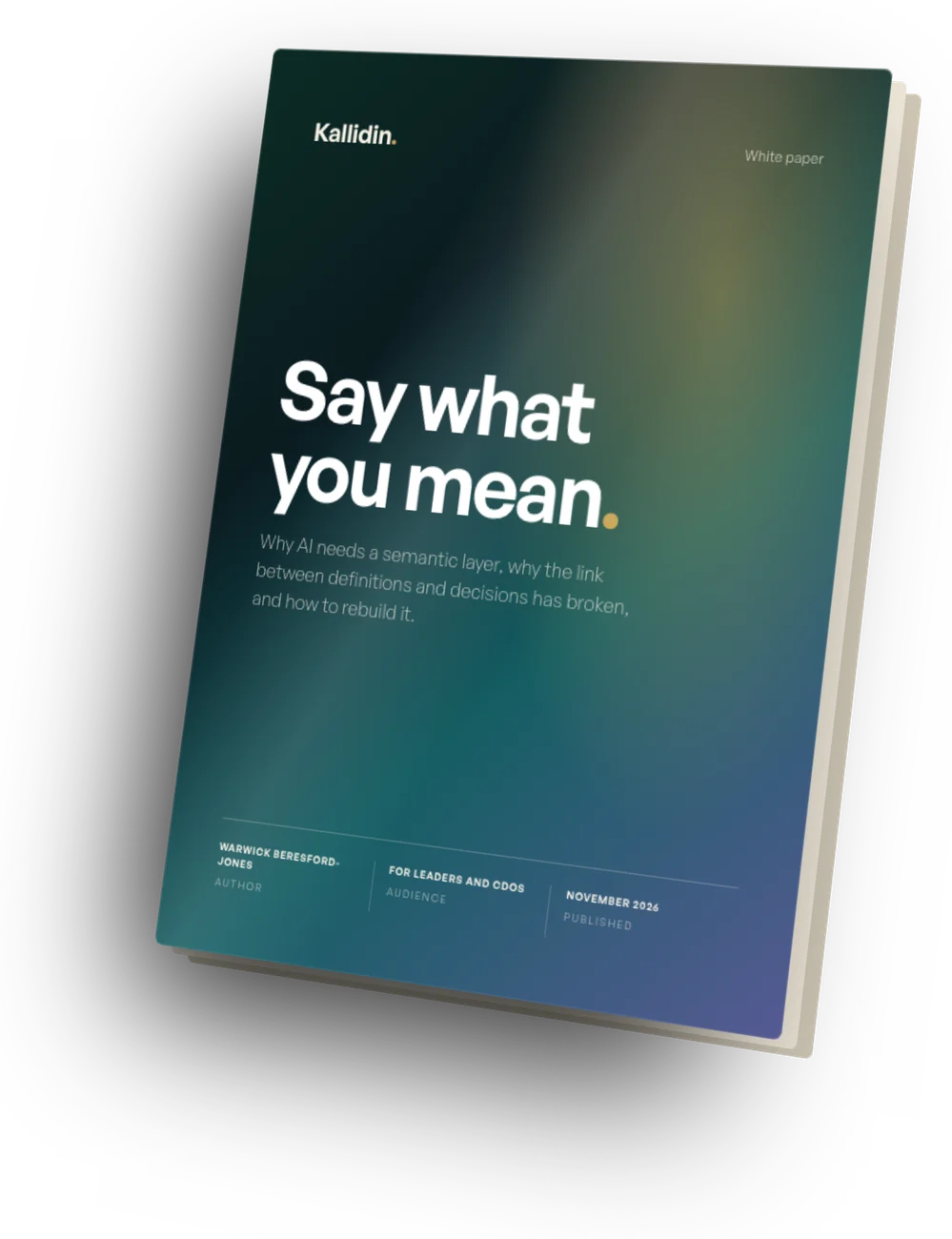
Say what
you mean.
Why AI needs a semantic layer, why the link between definitions and decisions has broken, and how to rebuild it.
 By Warwick Beresford-Jones, Chief Product Officer
In brief.
Every organisation speaks its own language, and most speak several. Finance, sales, marketing and operations use the same words to mean different things, and people cope because they know the context. AI doesn’t. Ask an AI model a business question and it will quietly pick a meaning and present the answer with total confidence. The semantic layer is what stops that: the organisation’s own dictionary, between its data and anyone, or anything, that asks a question.
Sources: Gartner, February 2025; Dataiku and The Harris Poll, 2025; NASA, 1999. Full sources in the paper.
What’s inside.
Thirteen short sections, from one board question with four right answers to where to start.
- 01One question. Four right answers.
- 02What a semantic layer is, in plain English
- 03Why AI makes this urgent
- 04Where the definitions collide
- 05Why the link breaks: disposable tools
- 06You already have a semantic layer. Keep it.
- 07Data down alone isn’t enough
- 08Both directions: how KAL builds it
- 09Why the questions lead
- 10The questions are the pulse of the organisation
- 11See every question. Review every definition.
- 12What good looks like
- 13Start here
Get the paper.
Fifteen pages for business leaders and CDOs, on why AI needs a semantic layer and how to build one without throwing away what you already have.
More white papers.
Get all four in one email →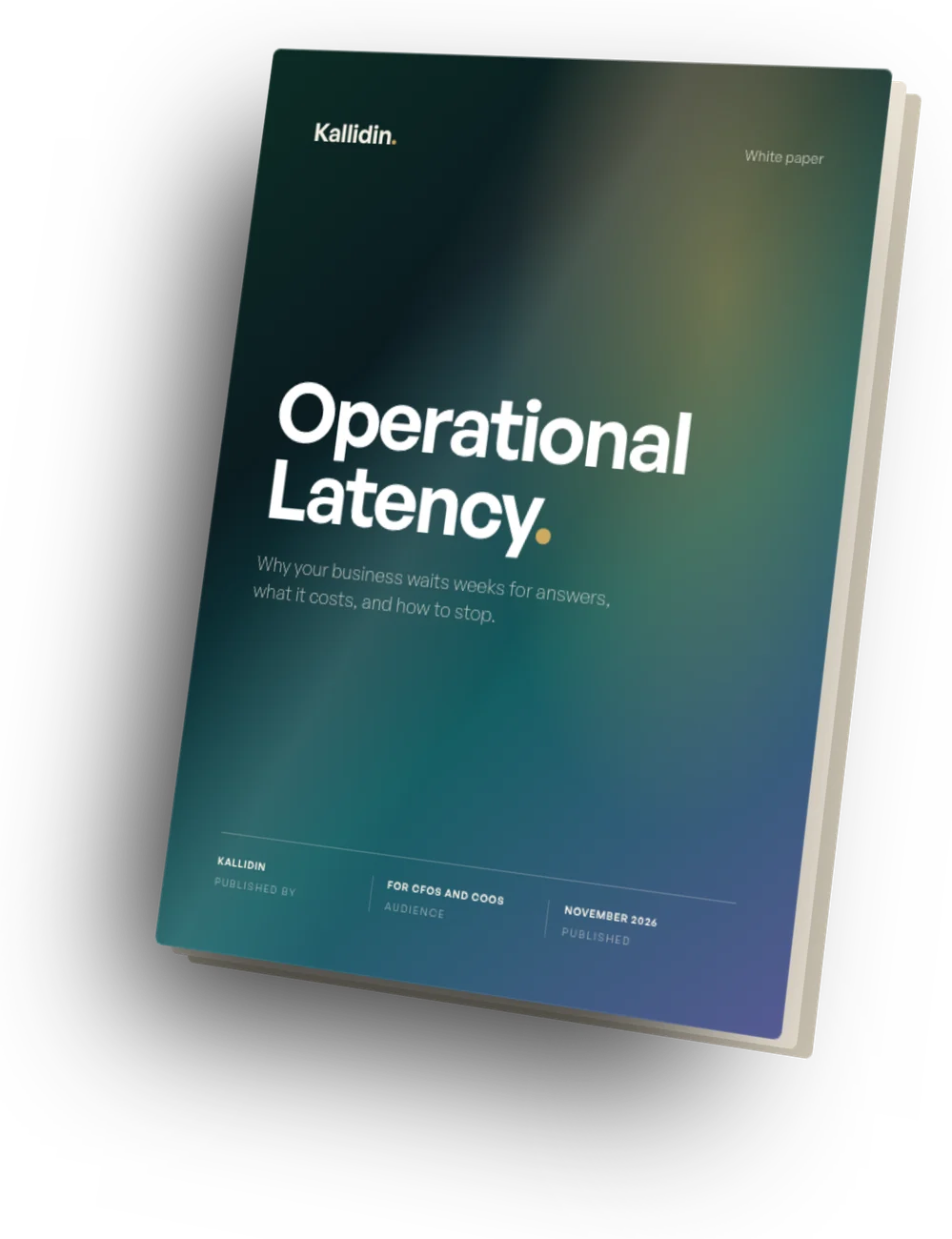 Operational Latency.Why your business waits weeks for answers, what it costs, and how to stop.Get the paper
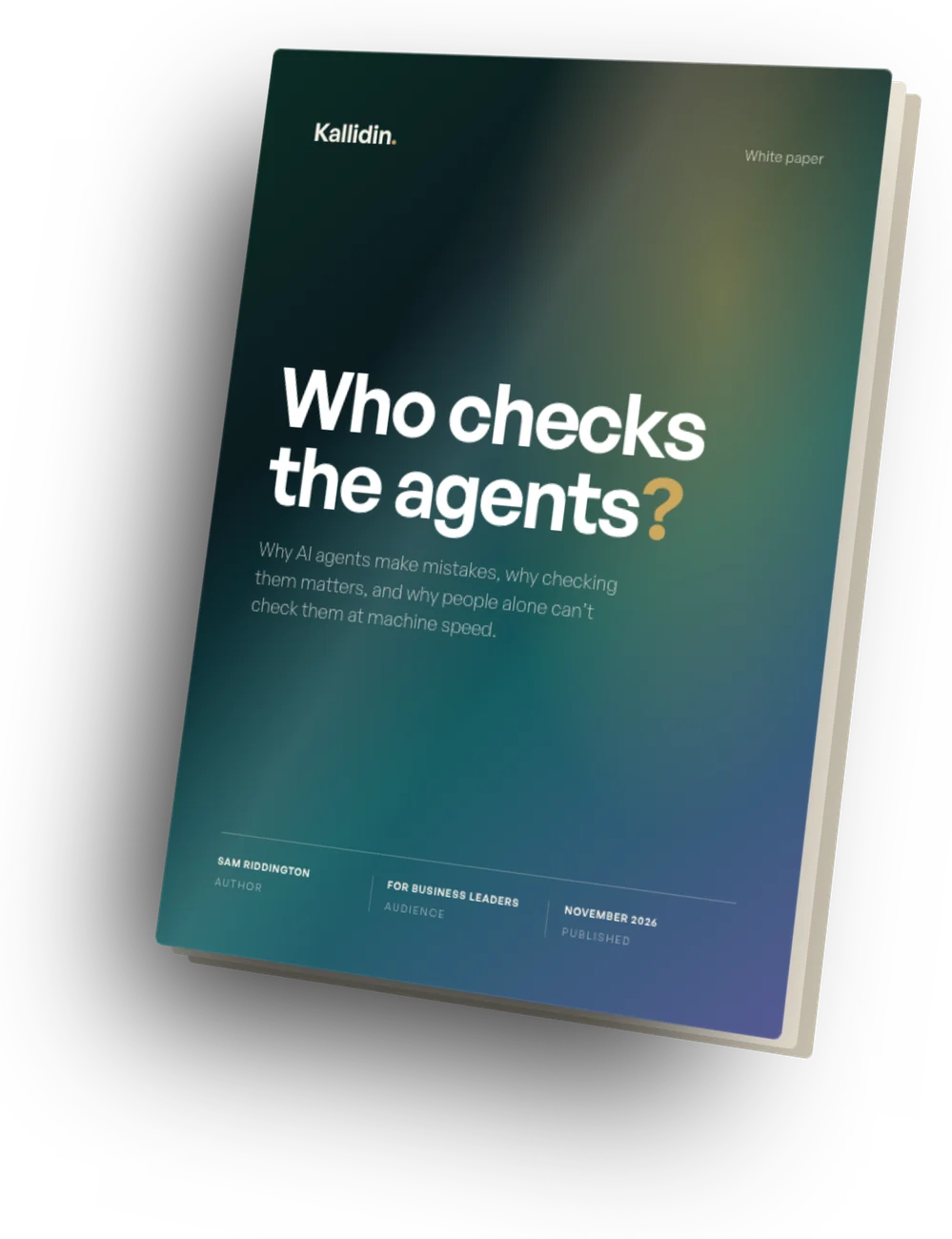 Who checks the agents?Why AI agents make mistakes, why checking them matters, and why people alone can’t check them at machine speed.Get the paper
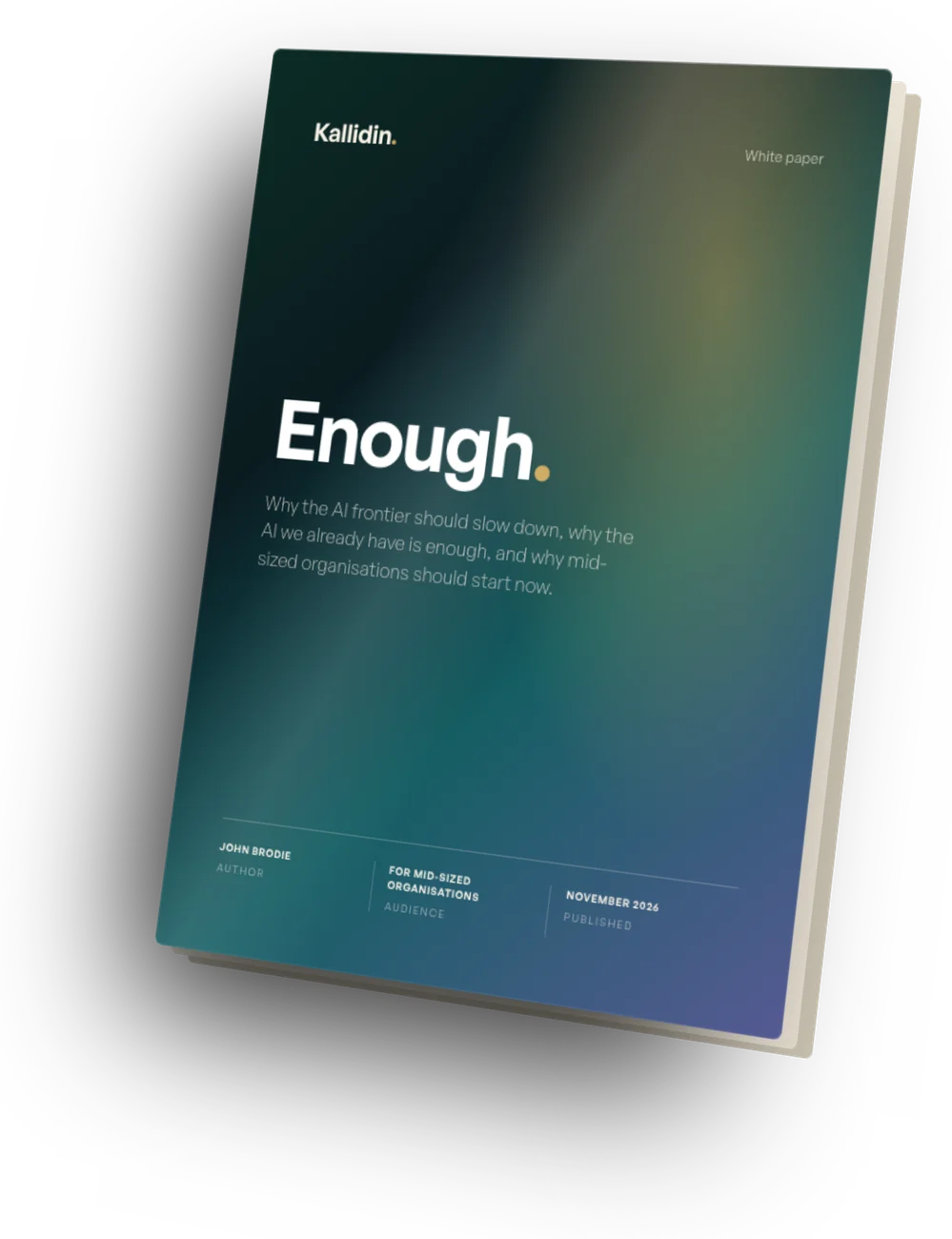 Enough.Why the AI frontier should slow down, why the AI we already have is enough, and why mid-sized organisations should start now.Get the paper